
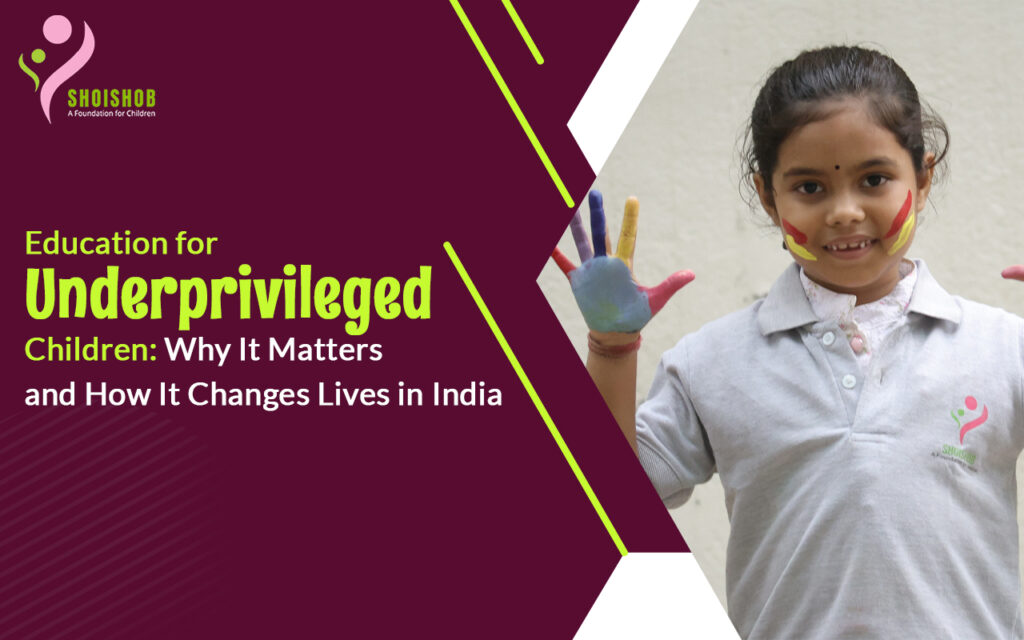
Education for Underprivileged Children: Why It Matters and How It Changes Lives in India

Every Child Deserves the Chance to Learn
Education is more than reading books or passing examinations. It is the foundation of confidence, opportunity, and independence. For millions of children in India, however, access to quality education remains a privilege rather than a right. Poverty, hunger, lack of resources, and social inequalities continue to prevent countless children from attending school and achieving their dreams.
Investing in education for underprivileged children is one of the most powerful ways to transform lives, strengthen communities, and build a better future for the nation. Every classroom opened, every child encouraged to learn, and every opportunity created brings India one step closer to a more equal society.
At Shoishob – A Foundation for Children, we believe that education is not just about preparing children for careers. It is about preparing them for life.
Why Education Breaks the Cycle of Poverty
Poverty and lack of education often go hand in hand. Children growing up in economically disadvantaged families may have limited access to schools, learning materials, technology, and even proper nutrition.
Education changes this reality by helping children:
- Develop knowledge and practical life skills.
- Improve confidence and decision-making abilities.
- Access better employment opportunities in adulthood.
- Reduce dependence on child labour.
- Create financial stability for future generations.
When one child receives an education, the positive impact extends to the entire family. Educated individuals are more likely to earn stable incomes, prioritise healthcare, support their children’s education, and contribute positively to society.
Education doesn’t just change one life. It changes generations.
The Biggest Barriers Underprivileged Children Face
Although education is a fundamental right, many children still struggle to access it.
1. Financial Challenges
Many families cannot afford school fees, uniforms, books, stationery, or transportation. Children are often expected to work and contribute to household income instead of attending school.
2. Hunger and Malnutrition
A hungry child finds it difficult to concentrate, participate, and retain information. Nutrition plays a critical role in learning outcomes.
3. Limited Access to Quality Schools
Many rural and underserved communities lack proper educational infrastructure, trained teachers, or digital resources.
4. Gender Inequality
In many communities, girls continue to face barriers such as early marriage, household responsibilities, and social stereotypes that interrupt their education.
5. Digital Divide
As education increasingly moves online, many underprivileged children lack smartphones, computers, or internet access, making digital learning inaccessible.
Government Initiatives Supporting Education in India
The Government of India has introduced several initiatives to improve educational access for children from disadvantaged backgrounds.
Right to Education (RTE) Act
The Right to Education Act ensures free and compulsory education for children between the ages of 6 and 14 years.
Samagra Shiksha
This integrated school education programme aims to improve learning outcomes, infrastructure, teacher training, and inclusive education.
PM POSHAN (Mid-Day Meal Scheme)
Nutritious meals provided in schools help improve attendance, reduce classroom hunger, and support children’s physical and cognitive development.
Beti Bachao, Beti Padhao
This initiative promotes girls’ education while addressing gender discrimination and encouraging equal opportunities.
While these programmes have significantly improved access, government efforts alone cannot address every challenge. This is where NGOs play an essential role.
The Role of NGOs in Educating Underprivileged Children
Non-governmental organisations bridge the gap between communities and opportunities.
They often provide support that extends beyond academics by addressing the challenges that prevent children from learning.
NGOs contribute through:
- Free educational support
- Learning materials and stationery
- Computer and digital literacy programmes
- Nutritious meals
- Health check-ups
- Creative and cultural development
- Mentorship and emotional support
- Community awareness programmes
By focusing on holistic child development, NGOs ensure that children not only attend school but also thrive.
Why Parents Play an Important Role
Education becomes most effective when schools, NGOs, and families work together.
Parents who encourage learning at home help children build confidence and motivation.
Simple actions make a significant difference:
- Encouraging daily reading
- Celebrating academic achievements
- Maintaining communication with teachers
- Supporting regular attendance
- Creating a positive learning environment at home
When parents become active participants in education, children are more likely to stay engaged and continue learning.
The Connection Between Nutrition and Learning
Education begins with a healthy mind, and a healthy mind depends on proper nutrition.
Children who receive balanced meals are more likely to:
- Stay attentive during classes
- Improve memory and concentration
- Participate actively in learning
- Experience better physical growth
- Build stronger immunity
Providing nutritious meals is not simply a welfare initiative. It directly contributes to educational success.
This is why food support remains an essential component of child development programmes.
Why Girls' Education Matters
Educating girls creates one of the strongest foundations for social progress.
Girls who receive education are more likely to:
- Delay early marriage
- Achieve financial independence
- Make informed health decisions
- Support their children’s education
- Become community leaders
When girls are educated, families become stronger, communities become healthier, and societies become more inclusive.
Every girl deserves the opportunity to learn without barriers.
Digital Education: Preparing Children for the Future
Today’s world requires digital skills alongside traditional education.
Computer literacy and digital learning help children do the following:
- Access online educational resources
- Build technological confidence
- Improve career readiness
- Develop critical thinking and problem-solving skills
Providing digital education ensures children are prepared for future opportunities in an increasingly technology-driven world.
Real Success Begins with Opportunity
Every successful individual was once a child who needed someone to believe in them.
Across India, countless children have transformed their lives after receiving access to education, proper nutrition, mentorship, and supportive learning environments.
Some become teachers.
Some become healthcare professionals.
Some become entrepreneurs.
Others simply become confident individuals capable of building better lives for themselves and their families.
Every success story begins with one opportunity.
How Shoishob Foundation Supports Education for Underprivileged Children
At Shoishob – A Foundation for Children, education is the heart of everything we do.
Our mission goes beyond textbooks to create an environment where children can learn, explore, and grow with confidence.
Our initiatives include:
- Quality education by experienced teachers
- Computer and digital learning programmes
- Nutritious meals and food support
- Cultural activities including art, dance, and creative learning
- Medical support and regular health check-up camps
- Clothing and basic needs assistance
- Skill-building activities that encourage confidence and personal growth
Beyond supporting children, Shoishob also empowers women through livelihood programmes, hygiene support, and skill development, helping build stronger families and more resilient communities.
Because when children are supported and families are empowered, lasting change becomes possible.
Conclusion
Education is one of the greatest investments we can make for a better future.
Every child deserves access to knowledge, dignity, opportunity, and hope, regardless of their background or circumstances.
By supporting education for underprivileged children, we are not simply helping children attend school. We are helping them discover their potential, break the cycle of poverty, and build brighter futures for themselves and generations to come.
Together, governments, NGOs, communities, parents, and individuals can create a world where every child has the opportunity to learn, dream, and thrive.
Because every child deserves more than an education.
They deserve a future.

Frequently Asked Questions
Why is education for underprivileged children important?
Education helps children develop knowledge, confidence, life skills, and opportunities that can break the cycle of poverty and improve their future.
What are the biggest challenges underprivileged children face in accessing education?
Common barriers include poverty, hunger, lack of school resources, gender inequality, child labour, and limited access to digital technology.
How do NGOs support children's education?
NGOs provide educational support, nutritious meals, healthcare, learning materials, computer education, mentoring, and creative development programmes.
Why is nutrition important for learning?
Proper nutrition improves concentration, memory, physical growth, and overall academic performance, helping children learn more effectively.
How does Shoishob Foundation help underprivileged children?
Shoishob supports children through education, digital learning, nutritious meals, healthcare, cultural activities, basic needs assistance, and holistic development programmes while empowering women and strengthening families.
Join us in creating opportunities, restoring dignity, and building brighter futures for children and families in need.
Shoishob Foundation is a trusted NGO in Kolkata and a dedicated child welfare organisation, empowering underprivileged children and women through education, cultural development, healthcare, and livelihood initiatives to create brighter, more dignified futures.
/* Background Overlay */
background-color: rgba(0, 0, 0, 0.75); /* Dark semi-transparent background */
/* Active State */
/* Popup Container (Fully Responsive) */
max-width: 500px; /* Laptop / Desktop width */
width: 100%; /* Mobile responsive */
max-height: 90vh; /* Height overflow control for small screens */
/* Popup Image */
max-height: 85vh; /* Screen se bahar nahi jayegi */
/* Cross (Close) Button */
background-color: #dc2626; /* Eye-catching red color */
/* Mobile screens ke liye adjust close button */
// 1 Second (1000ms) baad turant open karne ke liye
// Close Button click event
// Background Overlay click karne par close hoga





-
Head Office:
308 Dr B C Roy Sarani, Masunda West, New Barrackpur, Kolkata - 700131 -
Branch Office:
15A/6, Khanpur Rd, Naktala, Netaji Nagar, Naktala, Kolkata - 700047 - info@shoishobfoundation.com
- +91 84209 72430
Copyright © 2026 Shoishob Foundation. All Rights Reserved. Crafted with ❤️ by Aspire Digital Media