
Why Are Nutrition and Education Equally Important for a Child’s Future?

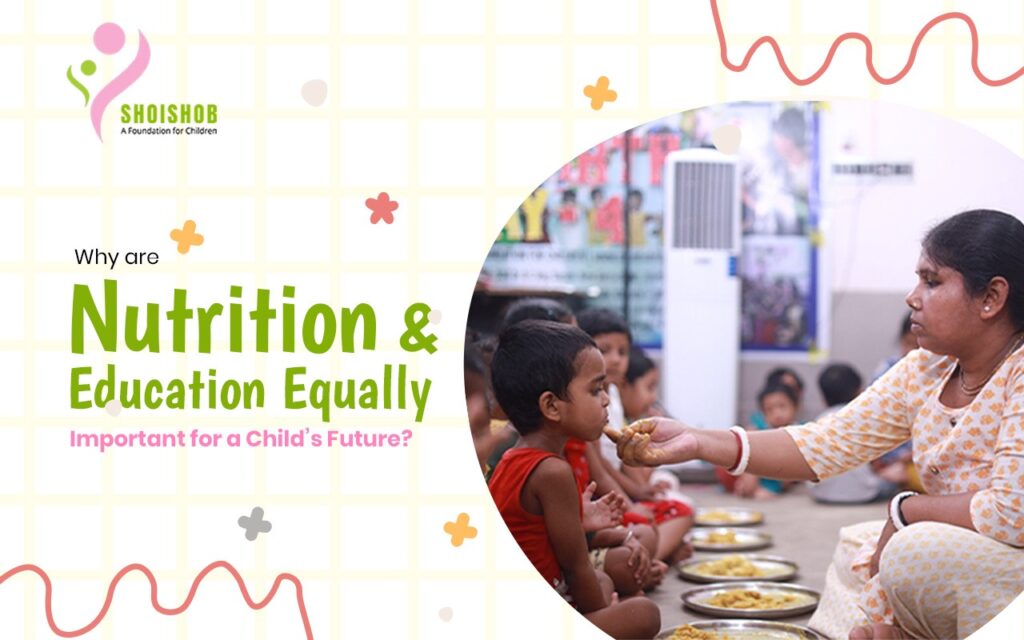
Ask a teacher why a child stopped paying attention in class, and sometimes the answer is an empty stomach rather than a hard lesson. Child nutrition in India is closely linked to what happens inside classrooms, and the two are hard to separate. A child who cannot eat well struggles to learn, and a child who never reaches school cannot use good food to build a better life. This post looks at why both matter equally, and what that means for families, schools and the organisations that support them.
How the Body and the Brain Grow Together
Most children’s brains develop fastest in the early years, and that growth depends on steady nutrients. The importance of nutrition for children goes well beyond height and weight. A few points explain why:
- Protein, iron, iodine and healthy fats all help build the networks in the brain that support memory and attention.
- Iron deficiency is one of the most common causes of tiredness in children, and it can reduce concentration long before a learning problem is noticed.
- A child can look healthy and still lack the vitamins needed for focus, which is why growth charts alone do not tell the full story.
- Breakfast matters more than many families realise. A child who skips it starts each lesson already behind.
The early years are often described as a window, because what a child receives during this period shapes learning capacity for years afterwards. The specifics vary from one family to another, but the basics are consistent: regular meals, clean water and a caring adult who talks and reads with the child can make a visible difference.
Teachers in many communities describe the same pattern. Children who arrive hungry find it hard to copy from the board, keep up with reading or stay focused through a full afternoon. These are not signs of low ability. They are signs of a body spending its energy on getting through the day.
Why Education Cannot Do the Job Alone
Schools can teach arithmetic, language and science well, but they cannot fill an empty plate at home. The two work best together:
- A well-taught child who misses weeks of school because of illness will fall behind, however good the teaching is.
- Education gives children the skills to earn, make decisions and eventually support their own families.
- Nutrition gives children the physical energy and health to use those skills every day.
- When only one is present, the benefit tends to fade. Well-fed children without schooling miss the chance to build independence, while schooled children who eat poorly often hit a ceiling in their teenage years.
Education also protects health in quieter ways. Children who attend school regularly are more likely to receive vaccinations on time, take part in health checks and learn about hygiene. Parents with some schooling often make more informed choices about food, sanitation and when to seek care for a sick child.
Where Child Nutrition in India Meets the Classroom
Child nutrition in India remains a serious concern in many districts, particularly in rural areas and in urban settlements where daily wages are uncertain. Families often serve adults first, which means children receive smaller portions or less variety. Girls can be affected even more, since they are sometimes last to be served.
Schools are often where the gap becomes visible, and where practical help can start:
- Regular school meals give children a reason to attend and a dependable source of energy.
- Basic health checks can spot anaemia, poor eyesight or dental pain early, when simple treatment still works.
- Handwashing before meals reduces the stomach infections that cause frequent absence.
- Teachers who notice a child is consistently tired or inattentive can raise the issue with parents before the child falls far behind.
None of this works if the school day feels stressful. Teachers who greet children warmly, keep classrooms clean and treat hunger as a real barrier create conditions where children can settle in. Simple routines, such as a set time for water breaks and a predictable meal schedule, help children feel secure enough to focus.
What Families Can Do at Home
Every household can contribute to better child nutrition in India, and most of the changes do not require a big budget:
- Serve a protein source at every meal, even a small portion of dal, paneer or egg.
- Keep fresh fruit and roasted chana available as snacks instead of packaged biscuits.
- Encourage children to drink safe water throughout the day, not only at mealtimes.
- Set a quiet, regular time for homework so children study when they are rested.
- Ask the school about any health or nutrition support available to students.
Parents do not need perfect information to start. Asking what a child ate for lunch, noticing whether they seem drowsy in the afternoon and sharing concerns with the class teacher are all useful steps. Many problems are easier to solve when they are caught early.
The Role of Community Organisations
Families cannot always carry this alone. Community organisations fill the gaps that households and schools leave open. They can run learning support sessions, hold nutrition awareness workshops for mothers, connect children with health services and notice which children are slipping behind. Child nutrition in India improves most when these efforts are steady and local rather than occasional campaigns.
Volunteers can also model good habits. Sitting with children during a meal, reading together and showing how to wash hands properly make lessons stick. When a child sees an adult caring for their wellbeing, the message reaches far beyond the session itself. Keeping track of attendance, growth and learning progress together gives a clearer picture of each child. When a volunteer notices that a child has missed several weeks, that observation can prompt a conversation with the family before the problem grows.
Looking Ahead
A child’s future is shaped by many decisions made long before adulthood. Nutrition and education are not competing priorities. A child who is fed well can learn, and a child who learns can later choose a healthier and more stable life for their own children. Breaking that cycle takes patience, but the benefits carry across generations. Families, schools, community groups and local leaders each hold a piece of the answer.
About Shoishob Foundation for Children
Shoishob Foundation for Children is a child welfare NGO based in West Bengal. It works with children and their families on education, personal development and the everyday basics that help young people thrive. The team believes that a child who is well fed, safe and curious has a far better chance of shaping their own future. The organisation’s approach treats child nutrition in India and education as connected goals, not separate projects.
Its work focuses on:
- Education support that keeps children learning and attending school
- Health and nutrition awareness for families
- Skill development and cultural activities for children
- Programmes that help women build financial and personal independence
If you want to support this work, visit shoishobfoundation.com to learn about volunteering, donations and partnerships. Every contribution helps a child stay in school and stay healthy enough to learn.

Frequently Asked Questions
Why is nutrition important for a child’s education?
Nutrition supports attention, memory and energy, which directly affect how much a child absorbs in class.
What nutrition gaps are common among Indian children?
Child nutrition in India often faces gaps in iron, protein and vitamin A, which many families do not notice without a check-up.
Can better nutrition improve school attendance?
Yes. Children who eat regularly and fall ill less often miss fewer school days.
How can parents provide balanced meals on a limited budget?
Use affordable staples such as dal, seasonal vegetables, eggs and roasted chana, and cook at home where possible.
How can someone support child welfare work in West Bengal?
You can volunteer, donate or spread awareness, and the foundation’s website lists current ways to get involved.
Join us in creating opportunities, restoring dignity, and building brighter futures for children and families in need.
Shoishob Foundation is a trusted NGO in Kolkata and a dedicated child welfare organisation, empowering underprivileged children and women through education, cultural development, healthcare, and livelihood initiatives to create brighter, more dignified futures.
/* Background Overlay */
background-color: rgba(0, 0, 0, 0.75); /* Dark semi-transparent background */
/* Active State */
/* Popup Container (Fully Responsive) */
max-width: 500px; /* Laptop / Desktop width */
width: 100%; /* Mobile responsive */
max-height: 90vh; /* Height overflow control for small screens */
/* Popup Image */
max-height: 85vh; /* Screen se bahar nahi jayegi */
/* Cross (Close) Button */
background-color: #dc2626; /* Eye-catching red color */
/* Mobile screens ke liye adjust close button */
// 1 Second (1000ms) baad turant open karne ke liye
// Close Button click event
// Background Overlay click karne par close hoga





-
Head Office:
308 Dr B C Roy Sarani, Masunda West, New Barrackpur, Kolkata - 700131 -
Branch Office:
15A/6, Khanpur Rd, Naktala, Netaji Nagar, Naktala, Kolkata - 700047 - info@shoishobfoundation.com
- +91 84209 72430
Copyright © 2026 Shoishob Foundation. All Rights Reserved. Crafted with ❤️ by Aspire Digital Media