
How Does Child Marriage Affect Girls’ Education and Future in India?

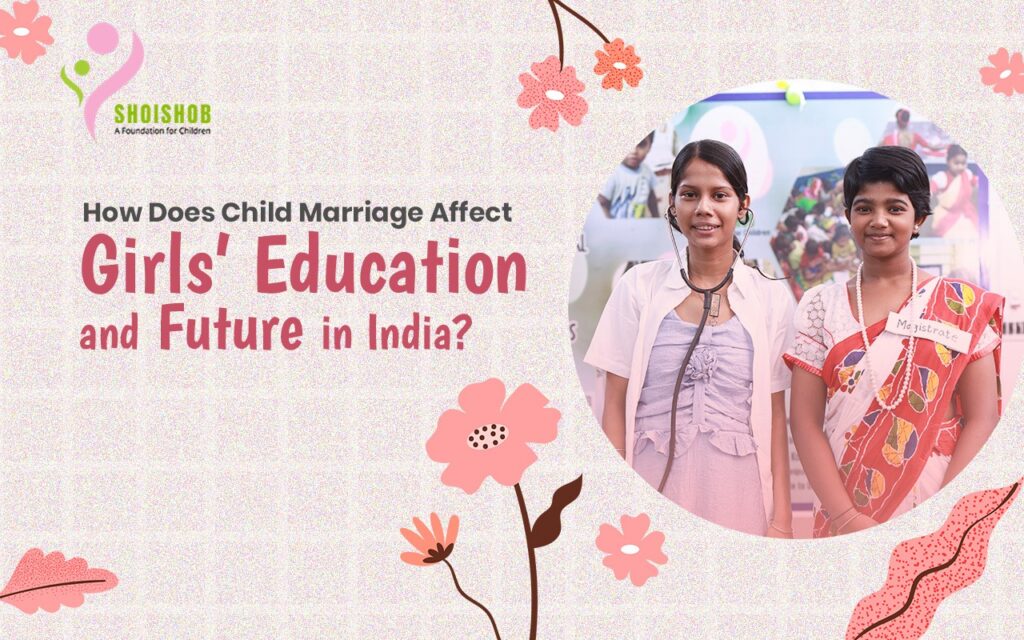
Ask a young girl what she hoped to become, and her answer often reveals more than her age. When a girl is married early, the hopes she once had for school, work and independence can close quickly. Child Marriage in India is closely tied to how girls are educated, how their health develops and how much control they have over their own lives. This post looks at those connections, explains why the effects reach well beyond the wedding day and describes what helps girls stay on a path of their own choosing.
Effects of Child Marriage on Schooling
Marriage at a young age usually ends formal education. Once a girl takes on household responsibilities or moves to her husband’s home, school attendance often stops. Many girls do not return, even when they wish to, because the expectation is that they will focus on family duties.
The loss of schooling has effects that accumulate over time:
- Girls leave school with fewer literacy and numeracy skills, which limits their choices later.
- Missed years make it harder to return, since classmates move on and lessons become more demanding.
- Without a school certificate, many routes into formal jobs remain closed.
- Learning that could have improved family health, budgeting and parenting is never gained.
Girls Education in India has made important gains over the years, but the gains are fragile when early marriage interrupts a girl’s progress. Keeping girls in school is often the most direct way to delay marriage and widen her options.
How Child Marriage in India Affects Health
Early marriage also carries health risks that many families do not discuss openly. A girl’s body is still developing when she becomes pregnant, which can lead to complications during pregnancy and childbirth. Young mothers may face higher risks of anaemia, prolonged labour and other problems that need prompt medical attention.
Health concerns can also affect education indirectly. A young mother who is exhausted, ill or caring for an infant has little time or energy for study. Child marriage in India therefore affects girls’ physical wellbeing and their ability to learn at the same time.
Economic Consequences for Girls and Families
Child Marriage in India often keeps households poor across generations. A girl who marries early has fewer chances to earn an independent income, which means she is more likely to depend on her husband or in-laws for money. That dependence can limit her ability to make decisions about health, savings and her children’s schooling.
Families also feel the pressure. Income that could have supported a household through education and skills training is instead spent on early marriage costs, and the girl’s future earning power is lost. Over time, communities with high rates of early marriage often struggle to build the skilled workforce they need.
Effects of Child Marriage on Future Opportunities
The effects of child marriage extend into adulthood, shaping opportunities that few girls can fully recover. Women who married young are more likely to have limited mobility, fewer social connections outside the home and less say in household decisions. These constraints reduce their participation in work, politics and community life.
Children of young mothers can also be affected. Lower levels of education and income within a household may influence how children are nourished, how often they attend school and how soon they receive medical care. The disadvantage can therefore pass from one generation to the next, unless families are supported to break the pattern.
Consider a hypothetical example. A girl who completes secondary school may be able to apply for a training course, earn a steady income and make informed decisions about when she starts a family. A girl who leaves school at twelve may face very different options, even if she is just as capable.
Barriers That Keep Girls in Marriage
Understanding why child marriage happens helps identify effective responses. Common drivers include:
- Financial pressure on families, which can make early marriage seem like a way to reduce household costs
- Beliefs that daughters are a financial burden or that early marriage protects their reputation
- Limited access to secondary schools, particularly in rural areas
- Lack of safe transport and distance from school, especially as girls grow older
- Limited awareness of the health and legal risks of early marriage among families and communities
Solutions must address these drivers together. Encouraging families alone will not work if girls cannot reach school or find work afterwards. Likewise, building schools will not be enough if families cannot afford to keep daughters enrolled.
What Helps Girls Stay on Track
Several approaches have proved useful in many contexts:
- Scholarships or allowances that reduce the cost of keeping girls in school
- Safe, reliable transport to secondary schools and colleges
- Mentoring programmes that connect girls with role models and career guidance
- Community dialogue that involves fathers, mothers, religious leaders and local leaders
- Vocational training that gives girls practical skills and income prospects
Community engagement is especially important. When families see that a daughter can earn, study and contribute to their wellbeing, they are more likely to support her continued education. Local champions, including teachers and women who have built their own livelihoods, can help shift expectations over time.
How Shoishob Supports Girls and Families
Shoishob Foundation for Children is a child-focused organisation based in West Bengal. Its work recognises that children’s rights and wellbeing depend on the conditions in which they grow up. Supporting girls to stay in school, building women’s independence and raising awareness about health and children’s education are all part of the same effort. Its approach includes:
- Education support that keeps children, including girls, learning and attending school
- Awareness sessions for families about health, nutrition and the value of schooling
- Skill development and cultural activities that build confidence and a sense of belonging
- Programmes that help women build financial and personal independence
The foundation’s work recognises that protecting girls’ education is one of the most practical ways to address Child Marriage in India. Those who want to learn more about this work can visit shoishobfoundation.com to explore programmes and ways to get involved.

Frequently Asked Questions
Why does child marriage affect girls’ schooling so strongly?
Early marriage often brings household responsibilities that replace school attendance, and many girls do not return to their studies afterwards.
Does child marriage affect a girl’s health?
Yes. Pregnancy at a young age can carry higher risks of complications, and young mothers may have less time and energy for their own development.
Is girls' education in India linked to delaying marriage?
Yes. Girls who stay in school longer tend to have more options and greater control over when they marry.
Can child marriage affect future generations?
It can. Limited education and income in one generation can shape children’s health, schooling and opportunities in the next.
How can I help girls stay in school?
You can volunteer, support scholarships or school transport, share awareness about the risks of early marriage or donate to organisations with clear reporting.
Join us in creating opportunities, restoring dignity, and building brighter futures for children and families in need.
Shoishob Foundation is a trusted NGO in Kolkata and a dedicated child welfare organisation, empowering underprivileged children and women through education, cultural development, healthcare, and livelihood initiatives to create brighter, more dignified futures.
/* Background Overlay */
background-color: rgba(0, 0, 0, 0.75); /* Dark semi-transparent background */
/* Active State */
/* Popup Container (Fully Responsive) */
max-width: 500px; /* Laptop / Desktop width */
width: 100%; /* Mobile responsive */
max-height: 90vh; /* Height overflow control for small screens */
/* Popup Image */
max-height: 85vh; /* Screen se bahar nahi jayegi */
/* Cross (Close) Button */
background-color: #dc2626; /* Eye-catching red color */
/* Mobile screens ke liye adjust close button */
// 1 Second (1000ms) baad turant open karne ke liye
// Close Button click event
// Background Overlay click karne par close hoga




-
Head Office:
308 Dr B C Roy Sarani, Masunda West, New Barrackpur, Kolkata - 700131 -
Branch Office:
15A/6, Khanpur Rd, Naktala, Netaji Nagar, Naktala, Kolkata - 700047 - info@shoishobfoundation.com
- +91 84209 72430
Copyright © 2026 Shoishob Foundation. All Rights Reserved. Crafted with ❤️ by Aspire Digital Media