When a Mother Is Empowered, a Whole Family Rises: The Link Between Women’s Independence and Children’s Futures

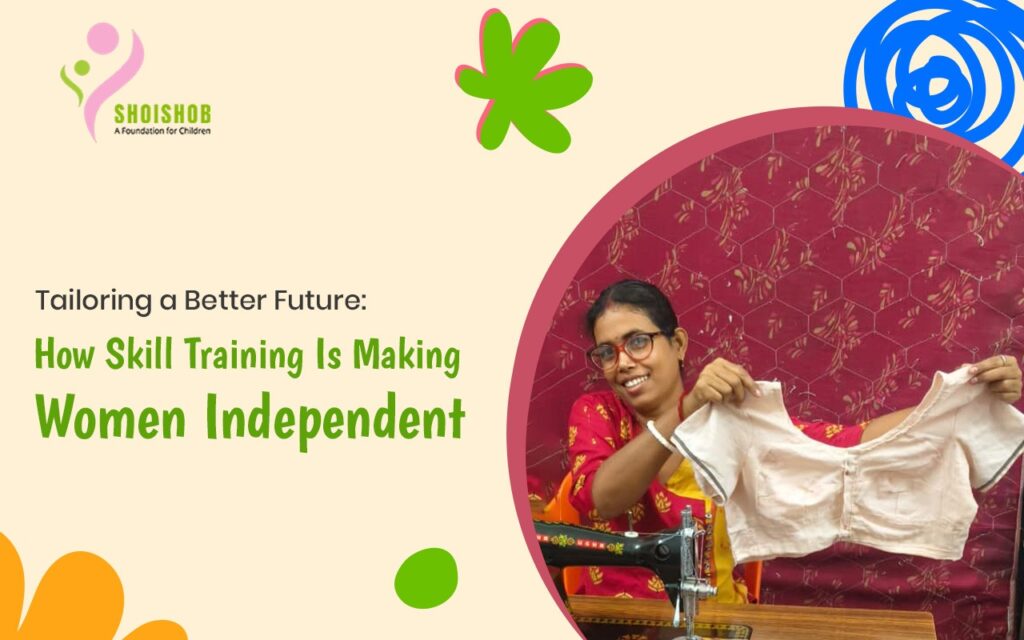
Walk through almost any lane in Kolkata around six in the evening, and you’ll see it: a mother stitching in a doorway while her child does homework on the step beside her. Two quiet efforts, side by side. Most people tell them as separate stories, one about a woman’s work and one about a child’s schooling. They’re the same story.
When a mother earns, her child’s world gets steadier. School fees are paid on time. Meals stop depending on how the week went. A child who watches her mother run a small income of her own learns something no classroom teaches. That’s the thinking behind a child and women empowerment organisation: work with the child and the mother together, because each one’s progress holds up the other’s.
This post looks at how the two connect, what changes inside a family, and where hygiene, skills and savings fit in.
How a Mother’s Income Reaches Her Child
Money is the obvious link, but it shows up in small, specific ways.UNICEF research highlights how women’s empowerment contributes to children’s well-being, including better outcomes in education, health and nutrition.
- School stays on track. Uniforms, books and exam fees stop being a yearly scramble.
- Meals become regular. Steady earnings smooth out the weeks when other work dries up.
- Health gets attention earlier. A fever is seen on day one instead of day four.
- Education lasts longer. Families under money pressure often pull children out of school early, girls most of all. A second source of income eases that pressure.
- Ambition grows. A girl who sees her mother earn and save starts picturing herself doing the same.
None of these is dramatic on its own. Added up over a school year, they can decide whether a child finishes the year or drops out.
Why Hygiene Belongs in the Same Conversation
Hygiene gets left out of livelihood talk. Skills and savings sound serious, while handwashing and clean water sound small. But a child who falls sick misses school, and a mother who stays up nursing her misses work. One fever can set both back a week.
Good hygiene programmes usually deal with everyday things:
- Handwashing before meals and after using the toilet
- Storing drinking water safely
- Menstrual hygiene for girls and women, talked about openly instead of whispered about
- Clean kitchens and careful food handling
- Knowing when a symptom needs a doctor and not another home remedy
These habits stick best when mothers and children learn them together. A routine that’s practised at home by both of them outlasts one taught in a classroom alone.
What a Child and Women Empowerment Organisation Does Differently
Most organisations pick a lane. Some focus on schooling, others on livelihood training, and both do real good. But a child supported at school while her mother struggles at home still carries that weight back every evening.
An organisation that works on both sides can see how one problem feeds another. A missed class may trace back to an empty kitchen. A skipped training session may trace back to a sick child. Seen together, these stop looking like unrelated problems and start looking fixable.
In practice, working on both sides means:
- One family, one picture. The people who know the child also know the mother, so connections don’t get missed.
- Support that fits real life. A mother with a small child at home needs different timing from a mother whose children are in school.
- Skills and care alongside each other. Training, savings guidance, health awareness and schooling are planned as parts of one effort.
- Progress that’s measured in households, not just in individuals.
What Gets in the Way
Even when a programme exists, plenty of mothers can’t simply walk in. The barriers are ordinary, and most of them can be solved:
- Time. A woman with small children and a household to run has very few free hours, so training has to fit around her day, not the other way round.
- Permission. Some families worry about what relatives and neighbours will say. Talking to the family, not just the woman, often matters as much as the class itself.
- Confidence. Many women have been told for years that they aren’t good with money or machines. One finished garment changes that faster than any speech.
- Starting out. A machine, fabric and basic tools cost something, and a woman with no savings can’t always begin on her own.
- Health at home. Frequent illness means missed sessions, which is one more reason hygiene sits at the centre of the work.
Naming these barriers early helps. A programme that pretends they don’t exist loses people in the first month.
What Changes Inside a Family
Treating women empowerment and child welfare as two halves of one job changes what success looks like. It stops being a certificate or a test score and becomes something you can see at home:
- A mother who decides. She chooses school for her daughter over early work, and she has the income to back that choice.
- A household that saves. Even small, regular amounts build a cushion for the month something goes wrong.
- Older children who help younger ones. Learning travels through the house.
- Open conversations. Health, money and plans get talked about at the same table.
- Neighbours who notice. Other families start asking how it’s done.
None of this happens overnight. It builds over months and years, one stitched garment and one finished school year at a time.
How Shoishob Foundation Brings the Two Together
We began in Kolkata on 11 August 2021 with one belief: “We can’t help everyone, but everyone can help someone.” Our work started with children. Today more than 400 children receive quality education, nutritious meals, healthcare, cultural activities, computer literacy and skill development.
Working with children showed us how much depends on the mother’s stability. A child can do everything right at school and still struggle if home is uncertain. So we built programmes for women too.
Here’s what sits side by side in our work:
- Children’s programmes. Education, meals, healthcare, cultural activities, computer literacy and skill development.
- Tailoring classes. Practical training that takes a woman from machine basics to finished garments.
- Financial empowerment initiatives. Sessions on saving, handling money and building regular income.
- Hygiene programmes. Awareness on personal and family hygiene for mothers and children alike.
As a child and women empowerment organisation, we keep these together on purpose. When a mother earns, her child stays in school longer. When a child is cared for, the mother can put her energy into building her work.
Everyone Can Help Someone
We say that line often because it’s true and because it makes the work feel less overwhelming. You don’t have to fix everything. You have to help one person, and then maybe one more.
Here are some ways to start:
- Tell a mother you know about our programmes. A lot of help goes unused because the people who need it never hear about it.
- Volunteer your time or a skill you can teach, whether that’s stitching, drawing, computers, storytelling or simply showing up regularly.
- Share our work with friends, family or colleagues who like to give back.
- Start small. An hour a month, given steadily, helps more than one big gesture that never repeats.
- Explore the initiatives of Shoishob Foundation and discover how you can help create a better future for mothers and children
A child and women empowerment organisation only goes as far as the people around it carry it. Every mother who learns a skill and every child who stays in school started with someone who decided to help. That someone could be you

Frequently Asked Questions
What is a child and women empowerment organisation?
It works with children and their mothers together, covering schooling, health, skills and savings. The two sides support each other.
Why does a mother’s independence matter for her child?
Steady income means fees get paid, meals are regular and illness is treated early. Children also learn from what they see at home.
Are hygiene programmes part of this work?
Yes. Sick days cost children school and mothers work, so good habits protect both.
What makes a trusted NGO in Kolkata worth supporting?
Look for clear programmes, visible results and a focus on whole families rather than one-off help. Visiting and asking questions is a good test.
How can I help?
You can volunteer, tell a family about the programmes or get in touch through shoishobfoundation.com. Anyone can help someone.
Join us in creating opportunities, restoring dignity, and building brighter futures for children and families in need.
Shoishob Foundation is a trusted NGO in Kolkata and a dedicated child welfare organisation, empowering underprivileged children and women through education, cultural development, healthcare, and livelihood initiatives to create brighter, more dignified futures.
/* Background Overlay */
background-color: rgba(0, 0, 0, 0.75); /* Dark semi-transparent background */
/* Active State */
/* Popup Container (Fully Responsive) */
max-width: 500px; /* Laptop / Desktop width */
width: 100%; /* Mobile responsive */
max-height: 90vh; /* Height overflow control for small screens */
/* Popup Image */
max-height: 85vh; /* Screen se bahar nahi jayegi */
/* Cross (Close) Button */
background-color: #dc2626; /* Eye-catching red color */
/* Mobile screens ke liye adjust close button */
// 1 Second (1000ms) baad turant open karne ke liye
// Close Button click event
// Background Overlay click karne par close hoga




-
Head Office:
308 Dr B C Roy Sarani, Masunda West, New Barrackpur, Kolkata - 700131 -
Branch Office:
15A/6, Khanpur Rd, Naktala, Netaji Nagar, Naktala, Kolkata - 700047 - info@shoishobfoundation.com
- +91 84209 72430
Copyright © 2026 Shoishob Foundation. All Rights Reserved. Crafted with ❤️ by Aspire Digital Media