
Why Computer Literacy and Skill Development Matter for Underprivileged Children

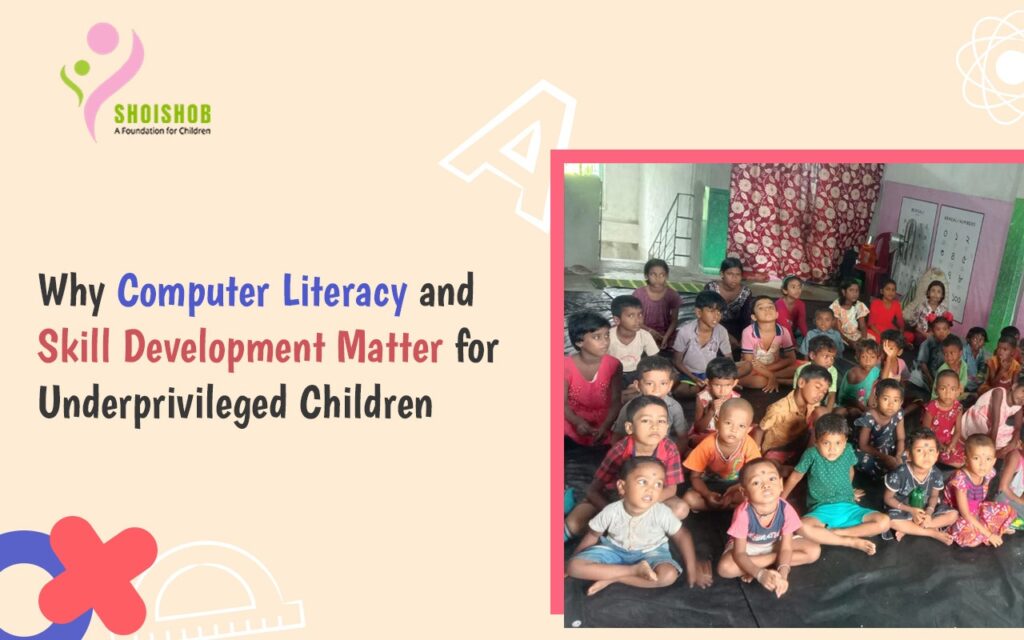
A child who reaches twelve without ever touching a keyboard isn’t short on talent. Nobody put one in front of them. And by the time school admissions, scholarship forms and first job applications move online, that missing hour of practice has turned into a real gap.
This is the quiet side of poverty. Hunger and school fees get the attention, and they should. But access to a computer and the chance to try something creative shape what a child can become just as much. Here’s why computer literacy for underprivileged children deserves a place next to food and school in any serious plan for their future.
The Gap Starts Earlier Than We Think
Children from well-off homes pick up digital habits without trying. They watch a parent book a train ticket, they search for a homework answer, and they edit a photo for fun. Nobody calls it learning, but it is.
Children in low-income households in Kolkata rarely get that background exposure. A shared phone with limited data is not the same as a computer they can practise on.UNESCO highlights the importance of digital literacy in helping children develop essential skills for education, employment and participation in today’s digital world. Over the years the difference shows up in:
- Slower typing and trouble using basic software in school projects
- Difficulty filling online forms for admissions, scholarships and government schemes
- Less confidence in interviews, since they’ve never used email or a video call
- Fewer options after Class 12, because many courses now expect digital basics
- A habit of using the internet only for entertainment, never for finding things out
None of this is about intelligence. It’s about hours spent with a machine.
What Computer Literacy for Underprivileged Children Should Cover
Handing over a laptop isn’t the answer. Computer literacy for underprivileged children works when it’s taught step by step, with someone beside them. A solid starting curriculum includes:
- Typing in English and Bengali, so they can write without hunting for every key
- Basic documents, spreadsheets and slides, the tools nearly every workplace uses
- Searching safely and checking whether a source can be trusted
- Setting up and using an email account
- Filling in an online form from start to finish
- Staying safe online: strong passwords, spotting scams, knowing what not to share
Ten-year-olds can handle most of this. They’re usually faster than the adults teaching them, and they enjoy it more.
Skills That Go Beyond the Screen
Digital ability on its own isn’t enough. The children who do well later are the ones who can also talk to people, solve a problem when the first idea fails, and work in a team. That’s why skill development for children has to sit beside computer classes, not apart from them.
Practical skill-building usually includes:
- Spoken English and clear communication
- Basic money sense, like saving and budgeting a small amount
- Hands-on work such as stitching, craft or simple repairs
- Group projects where each child owns one part and answers for it
- Time management, from turning up on time to finishing what they start
These habits don’t show up on a report card, but employers notice them within a week.
The Case for Creative Exposure
Ask any teacher which children light up in class and you’ll often hear it’s the ones who sing, draw or act. Creative activity builds focus and self-belief in a way worksheets rarely do.
Cultural activities for children matter especially in a city like Kolkata, where music, theatre, art and festivals are part of daily life. A child who has never been invited into that world can end up feeling it belongs to someone else. Taking part changes that. Children get to:
- Learn Rabindrasangeet, folk songs or classical dance from trained teachers
- Paint, sketch and make crafts for school and community events
- Perform on stage, which is often the first time they’re applauded
- Tell stories and write short pieces in their own language
- Take pride in their heritage instead of feeling left out of it
A child who’s been applauded once will usually risk raising a hand in class.
When Digital and Creative Learning Meet
The two don’t compete. They feed each other, and the best programmes mix them on purpose. Computer literacy for underprivileged children sticks far better when it’s tied to something they care about. A child who designs a festival poster on a computer is learning software and art together. Recording a song, editing it and sharing it teaches audio tools, patience and pride. Writing a short story on a keyboard in Bengali does more for typing speed than any drill.
Add cultural activities for children to the mix, and computer time stops feeling like a chore and starts feeling like play with a purpose. Over time the child stops seeing the computer as a distant, expensive thing and starts seeing it as a tool they can pick up. That mental shift matters more than any single lesson.
What Good Child Development Programmes in Kolkata Look Like
Not every initiative delivers equally. Whether you’re a parent, a volunteer or a donor, these are the signs of child development programmes. Kolkata families can actually rely on:
- Classes happen every week, not once a year
- Groups are small enough that every child gets time on a machine
- Teachers and mentors stay long enough to know each child by name
- Learning is hands-on, with projects the children can show off
- Meals, health checks and school support run alongside, since a hungry child can’t concentrate
- Progress is tracked and shared with parents
- Girls and boys get equal access
Be wary of one-day workshops and device donations with no teaching attached. They look good in photographs and change very little.
Worries Families Often Raise
Parents aren’t wrong to ask questions, especially when money and time are tight. The common ones have straightforward answers.
- “Won’t they just play games?” Supervised sessions with set tasks keep screen time purposeful, and games can become a reward instead of the default
- “Will it take time away from studies?” Done well, it helps. Children finish projects faster and start enjoying research
- “Is it only for older children?” Younger ones can begin with typing and drawing tools, then build up as they grow
- “What if we don’t have a computer at home?” That’s exactly why access at a learning centre matters. The practice happens there, and the confidence travels home with them
How Early Exposure Opens Doors
Skill development for children at ten or eleven compounds over the years. By sixteen, a child with steady digital habits and creative confidence can aim for things that were off the table before:
- Better marks, because projects and research are easier
- Vocational courses and apprenticeships that expect digital basics
- Entry-level jobs in offices, design, retail and services
- Higher studies, with the ability to apply for scholarships independently
- Small ventures of their own, from tailoring orders to online selling
Computer literacy for underprivileged children also pays off in a quieter way. Most importantly, the children stop thinking opportunity happens to other people. That belief is the real outcome, and it’s what keeps a child in school when things get hard at home.
How Shoishob Is Helping Children Get There
Shoishob – A Foundation for Children, based in Kolkata, began its work on 11 August 2021 with a simple belief: we can’t help everyone, but everyone can help someone. Today it supports over 400 children with quality education, nutritious meals, healthcare, cultural activities, computer literacy and skill development.
As a digital education NGO working with families who couldn’t otherwise afford this exposure, Shoishob treats a computer class and a dance class as equally important parts of growing up. Alongside the children’s work, its women’s empowerment side runs tailoring classes, financial empowerment initiatives and hygiene programmes, because a child does better when the household around them is stronger.
If you’d like to help a child learn to type their first paragraph, volunteer, donate or simply share this story, visit shoishobfoundation.com and see where you can fit in.

Frequently Asked Questions
1. At what age should children begin learning computers?
Around age eight or nine is a good start, once they can read and write comfortably. Simple supervised sessions work well before that.
2. Can a smartphone replace computer training?
Not really. Phones are fine for browsing, but forms, documents and typing need a proper keyboard and screen.
3. Why do children need creative activities if they’re learning job skills?
Creative work builds confidence, focus and expression. Those qualities help just as much in interviews as technical ability.
4. How does a digital education NGO make sure children stay safe online?
It teaches password habits, scam awareness and privacy rules, and keeps sessions supervised. Children learn what not to share before they go further.
5. How can I support child development programs Kolkata families depend on?
You can volunteer time, donate, or spread the word about local initiatives. Even a few hours of teaching helps.
Join us in creating opportunities, restoring dignity, and building brighter futures for children and families in need.
Shoishob Foundation is a trusted NGO in Kolkata and a dedicated child welfare organisation, empowering underprivileged children and women through education, cultural development, healthcare, and livelihood initiatives to create brighter, more dignified futures.
/* Background Overlay */
background-color: rgba(0, 0, 0, 0.75); /* Dark semi-transparent background */
/* Active State */
/* Popup Container (Fully Responsive) */
max-width: 500px; /* Laptop / Desktop width */
width: 100%; /* Mobile responsive */
max-height: 90vh; /* Height overflow control for small screens */
/* Popup Image */
max-height: 85vh; /* Screen se bahar nahi jayegi */
/* Cross (Close) Button */
background-color: #dc2626; /* Eye-catching red color */
/* Mobile screens ke liye adjust close button */
// 1 Second (1000ms) baad turant open karne ke liye
// Close Button click event
// Background Overlay click karne par close hoga





-
Head Office:
308 Dr B C Roy Sarani, Masunda West, New Barrackpur, Kolkata - 700131 -
Branch Office:
15A/6, Khanpur Rd, Naktala, Netaji Nagar, Naktala, Kolkata - 700047 - info@shoishobfoundation.com
- +91 84209 72430
Copyright © 2026 Shoishob Foundation. All Rights Reserved. Crafted with ❤️ by Aspire Digital Media