
Where Can I Donate Books and School Supplies for Under Privilege Children in Kolkata?

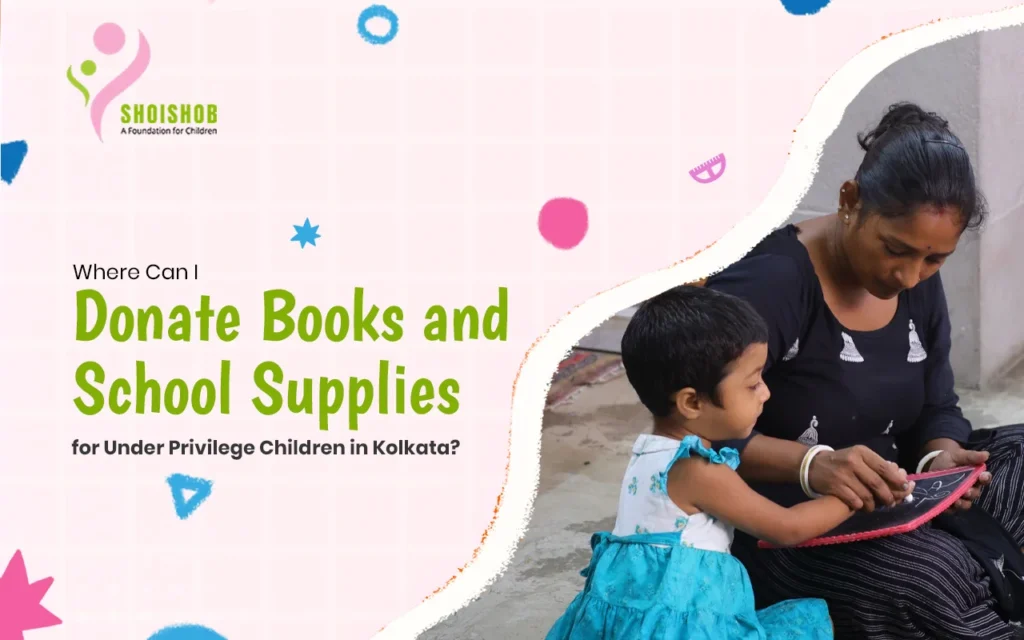
Every year, thousands of children in Kolkata drop out of school because they don’t have basic supplies. A missing notebook stops a girl from keeping up. No pencils mean a boy falls behind. A worn-out backpack becomes the reason a child feels too ashamed to attend class.
If you’ve ever wondered what happens to books you’ve outgrown or school supplies gathering dust at home, here’s your answer: they can change a child’s life.
This guide walks you through how to donate books for under-privileged children in Kolkata—the practical routes, which organisations make the most impact, and what actually reaches kids who need it.
Why Books and Supplies Matter
Children from low-income families often attend school anyway, even without proper resources. What they’re missing isn’t the will to learn—it’s the tools.
When a child has their own textbook:
- They don’t fall behind when shared copies run out
- They can underline, annotate, and engage with the material
- They feel like part of the classroom, not an afterthought
Same goes for notebooks, pens, pencils, erasers, and school bags. These small things are gateways. They signal to a child that learning matters, that their education is worth an investment.
Where to Donate Books for Under Privilege Children in Kolkata
Direct routes to schools:
- Government and municipal schools in underserved areas actively accept donations
- Reach out to the headmaster or principal; many schools maintain donation lists for subject-focused contributions
- Religious institutions like temples, mosques, and churches often run attached schools or learning centres
- Ask what gaps exist—sometimes a school desperately needs science textbooks but has plenty of storybooks
Through NGOs and foundations:
- Established organisations have vetting systems; they know which children and schools need what
- Donations are catalogued and tracked, so your book reaches the right hands
- Many organisations run collection drives and handle logistics
- Shoishob Foundation, one of the best NGO in Kolkata dedicated to child welfare, accepts book donations year-round
Community libraries and reading centres:
- Neighbourhood libraries run by local volunteers often lack fresh stock
- A donated collection can serve dozens of children
- These spaces are sometimes the only quiet place a child has to study
Online platforms:
- Some crowdfunding and donation platforms connect donors directly with schools
- You can browse requests and donate specifically what’s needed
- Transparency tools show how donations are used
Types of Books and Supplies That Help Most
Books worth donating:
- Subject textbooks (Hindi, English, mathematics, science, history, geography)
- Fiction books in regional languages and English
- Illustrated children’s books for younger kids
- Practice workbooks and problem-solving books
School supplies to include:
- Notebooks and writing pads
- Pencils, pens, and erasers
- Coloured pencils and markers
- Sharpeners and rulers
- Geometry boxes
- School bags and satchels
What not to donate:
- Damaged or mouldy books
- Books with torn pages or missing content
- Outdated textbooks from old syllabi (check with organisations first)
- Supplies past their expiration date
The Right Way to Donate
Check the condition first. A book with water damage or loose pages might actually discourage a child rather than help. Run through it—flip pages, check the spine, and look for completeness. You wouldn’t give a child something you’d throw away yourself.
Call or visit before dropping off. Organisations often have specific collection schedules and storage limits. Shoishob Foundation and similar groups appreciate advance notice because they sort and allocate donations carefully.
Ask about impact. Good organisations tell you where donations go. They’ll explain which school received your books or which child got the supplies. That transparency matters both for the donor and for maintaining accountability.
Keep a list of what you donated. It helps with tax documentation and gives you a sense of the volume you’re contributing.
Shoishob Foundation: Making It Happen
Shoishob Foundation operates from the belief that every child deserves access to education without economic barriers. They work specifically with underprivileged children across Kolkata, providing not just books and supplies but also mentoring and learning support.
When you donate through Shoishob:
- Your books are sorted by subject and grade level
- Supplies are bundled for maximum utility
- Donations reach schools in areas with the highest need
- You receive updates on impact (which schools benefited, how many children were reached)
Shoishob Foundation combines direct donations with literacy programmes, making sure materials don’t just pile up but actually get used and create measurable change.

Frequently Asked Questions
Can I donate books even if they're old?
Yes, if they’re in good condition and relevant to current school syllabi. Check with the organisation first—outdated textbooks from past curriculum versions aren’t useful.
Do I need to sort books by grade level before donating?
It helps, but not mandatory. Organisations like Shoishob do sorting as part of their process. However, labelling helps them work faster.
Can I donate digital books or e-readers instead?
Not all schools have electricity or internet access. Physical books are more reliable, though some organisations run programmes where e-readers support older children.
Is there a minimum quantity I need to donate?
No. Even five notebooks or two children’s books make a difference. Every donation counts.
How do I know my donation actually reached a child in need?
Work with organisations that provide feedback. Shoishob Foundation and similar best NGO in Kolkata will tell you how donations were distributed.
Join us in creating opportunities, restoring dignity, and building brighter futures for children and families in need.
Shoishob Foundation is a trusted NGO in Kolkata and a dedicated child welfare organisation, empowering underprivileged children and women through education, cultural development, healthcare, and livelihood initiatives to create brighter, more dignified futures.
/* Background Overlay */
background-color: rgba(0, 0, 0, 0.75); /* Dark semi-transparent background */
/* Active State */
/* Popup Container (Fully Responsive) */
max-width: 500px; /* Laptop / Desktop width */
width: 100%; /* Mobile responsive */
max-height: 90vh; /* Height overflow control for small screens */
/* Popup Image */
max-height: 85vh; /* Screen se bahar nahi jayegi */
/* Cross (Close) Button */
background-color: #dc2626; /* Eye-catching red color */
/* Mobile screens ke liye adjust close button */
// 1 Second (1000ms) baad turant open karne ke liye
// Close Button click event
// Background Overlay click karne par close hoga




-
Head Office:
308 Dr B C Roy Sarani, Masunda West, New Barrackpur, Kolkata - 700131 -
Branch Office:
15A/6, Khanpur Rd, Naktala, Netaji Nagar, Naktala, Kolkata - 700047 - info@shoishobfoundation.com
- +91 84209 72430
Copyright © 2026 Shoishob Foundation. All Rights Reserved. Crafted with ❤️ by Aspire Digital Media